
Great service. He arrived right when he said he would. He was polite, professional, and prompt. Got my oven fixed quickly, and efficiently. I was able to use it right away, and it's working better than ever. Thank you for your help. I definitely would recommend his services.
Oven Repair in Escondido & North County
When the oven quits, dinner plans go with it. Refrigerator & Appliance Repair – Escondido works on gas and electric ovens across Escondido and inland North County, usually the same day you call.
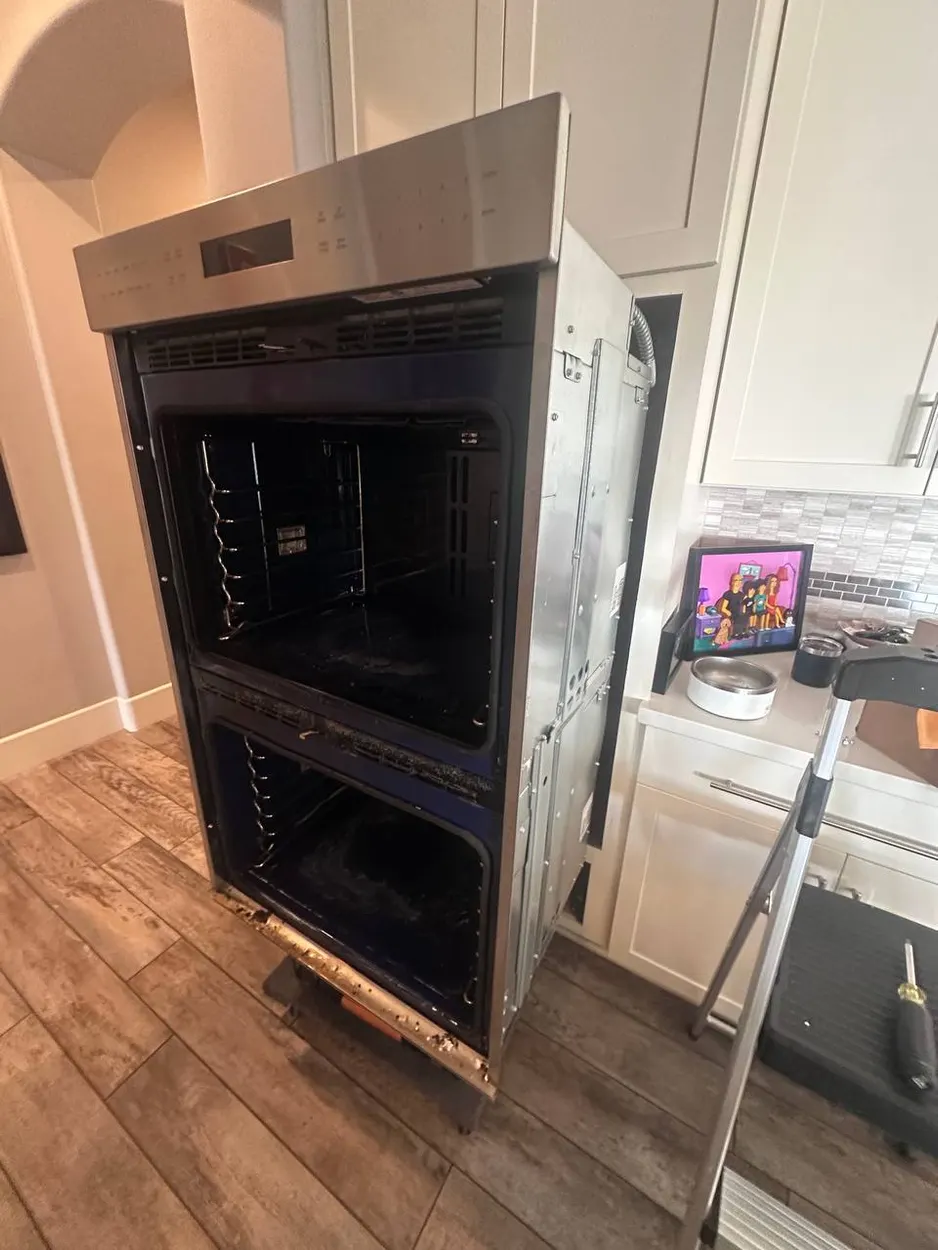
Five Oven Failures We See Every Week
Every visit opens with a flat $80 diagnostic that is credited to your repair. Labor carries a 90-day warranty, and we have been a family shop here since 2018. Call (858) 886-8646 any day, 7am to 9pm.
The oven stays cold
Cooktop burners fine, oven dead — the classic weeknight call. On electric models we test the bake element first; a blistered or split coil is visible the moment the door drops. On gas models, a weak igniter never pulls the safety valve open, so flame never arrives. Thermal fuses and burnt wire connections round out the suspects.
Burnt edges, raw middle
Uneven baking usually traces to one of three parts. An element with a dead section heats one side only. A gas igniter cycling late starves the burner mid-bake. A drifting temperature sensor tells the control the cavity is hotter than it is. We measure true cavity temperature against the dial, then replace the part that is lying.
The door won't shut — or won't let go
A sagging hinge bleeds heat, stretches cook times, and slowly cooks the control panel above it. A jammed lock can seal the oven entirely. Both are mechanical problems with one-visit fixes — hinges, springs, and lock assemblies we keep in stock.
Dead after self-clean
Self-clean is the oven's hardest day: the cavity holds near 900°F for hours. That heat loves to take out the thermal fuse and door-lock motor. If your oven never woke up after a clean cycle, say so — it points us straight at the right parts.
You smell gas
Stop troubleshooting. Turn the oven off, open windows, and skip the light switches. If the smell is strong, step outside and call SDG&E at 1-800-411-7343 first. Once the line is confirmed safe, we track down the failed valve, fitting, or igniter — those calls go to the top of the day's route. Once SDG&E confirms the line is safe, call us at (858) 886-8646 and we will take it from there.
Beyond the Big Five: Four Quieter Failures
The door stayed locked after self-clean
The cycle ended hours ago and the latch still won't release. Don't force it. Prying bends the latch hook, and then the whole assembly needs replacing. The usual culprits are a latch motor stalled mid-travel or a thermal fuse that blew during the cycle. Either way, the control loses track of the door and keeps it sealed. We release the lock by hand, then replace the part that caused the jam.
Bake is fine, broil is weak
On electric ovens the broil element runs across the cavity ceiling. A dead section or a burned terminal leaves it half-glowing and slow. We check the element's resistance, then its 240-volt feed, then the relay driving it. On many gas ranges the broiler lives in the bottom drawer with its own igniter. That igniter ages on its own schedule, separate from the bake igniter above it.
The convection fan got loud
A scraping noise usually means a bent blade clipping its housing — often from a pan bumped against the back wall. A squeal that grows as the oven warms points to dry motor bearings. Both are modest repairs. Ignore them and the fan eventually seizes, and convection recipes start coming out uneven.
The door glass burst into pebbles
Oven doors use tempered glass, so it fails loudly but politely — rounded pebbles, not shards. The break usually starts at a chip made weeks earlier by a pan or a slammed door. We replace the pane and check hinge tension, because a misaligned door stresses the new glass too. Skip baking until it's fixed; a missing inner pane pours heat onto the control panel.
Oven Repair Prices in Escondido
Most oven repairs here finish between $250 and $350. Below are five common jobs with honest numbers; the $80 diagnostic opens every visit and comes off the total once you approve the work. The figure goes on paper before the repair begins.
| Diagnostic visit — credited to your repair | $80 |
| Bake or broil element replacement | $250–$320 |
| Gas igniter replacement | $250–$340 |
| Oven temperature sensor replacement | from $250 |
| Door hinge or door-lock repair | $250–$350 |
| Control board replacement | from $350, written quote after diagnosis |
| Gas safety (oven) valve replacement | $250–$400 |
| Door glass (inner or outer pane) replacement | $250–$360 |
| Convection fan motor replacement | $250–$400 |
| Self-clean door latch motor & thermostat | from $250 |
These figures are typical ranges for reference only — the exact price comes after the $80 diagnostic, before any work begins, and the price you approve is the price you pay.
Double-oven and built-in jobs can cost more once cabinet work is involved; we quote those after the diagnostic.
Gas or Electric: What We Actually Test
"Oven repair" is one job title for two unrelated trades. Gas and electric ovens fail in different places, so we test them in different orders.
The gas side
A gas oven heats through a chain: the igniter glows, draws current, and that current holds the safety valve open. Watching the glow tells you little, because a dying igniter still glows. So we clamp a meter on the circuit instead. A round igniter should pull roughly 2.5 to 3.0 amps; flat ones run near 3.2 to 3.6. Below spec, the valve never opens and the burner starves. Amps tell the truth the glow hides. The valve itself fails far less often than people fear — we test it last and swap it only with meter proof.
The electric side
Electric ovens run their bake and broil elements on a 240-volt circuit. A failed element often shows itself: a blister, a split, one bright spot. Newer ranges hide the bake element under the cavity floor, so there is nothing to see. There the meter decides — a healthy element reads low double-digit ohms, a broken one reads open. If the elements pass, we move to the board relays and the wiring behind the back panel.
Thermostat or sensor — depends on the oven's age
Older ovens hold temperature with a hydraulic thermostat and a thin capillary bulb inside the cavity. It is fully mechanical and fully replaceable. Newer ovens use an RTD sensor — a probe reading near 1,080 to 1,100 ohms at room temperature, climbing as the cavity heats. The control board does the thinking. Most boards accept a calibration offset of about 35 degrees, so small drift is an adjustment, not a part.
Reading the F-Codes, Brand by Brand
A flashing code is the oven trying to help. The code narrows it to a circuit; the meter names the part. The same letters mean different things across brands, so here is our short field guide.
GE: F2 reports over-temperature — either real runaway heat or a sensor reading high. F3 and F4 point at the sensor circuit, open or shorted. We measure that sensor before condemning anything pricier.
Whirlpool, KitchenAid, Maytag: the four-character codes split neatly. F2E0 flags a stuck or shorted keypad. F3E0 and F3E1 are the sensor circuit — open versus shorted. F3E2 means the oven genuinely ran too hot in bake mode. F9E0 is the door lock losing its position.
Samsung: C-21 calls out the temperature sensor, while C-F1 points at the board's own memory. LG: F9 means the oven failed to reach 150 degrees within five minutes — on gas that is almost always a tired igniter, on electric a dead element.
Bosch: the two we meet most are E011, a control button held or jammed, and E115, an over-temperature event. Bosch lists the rest in its manuals, and we carry the service sheets.
Before you reset the breaker, write the code down. Reading us the exact code over the phone lets us load the right sensor, latch, or board before we drive.
Wall Ovens & Double Ovens — Our Regular Work
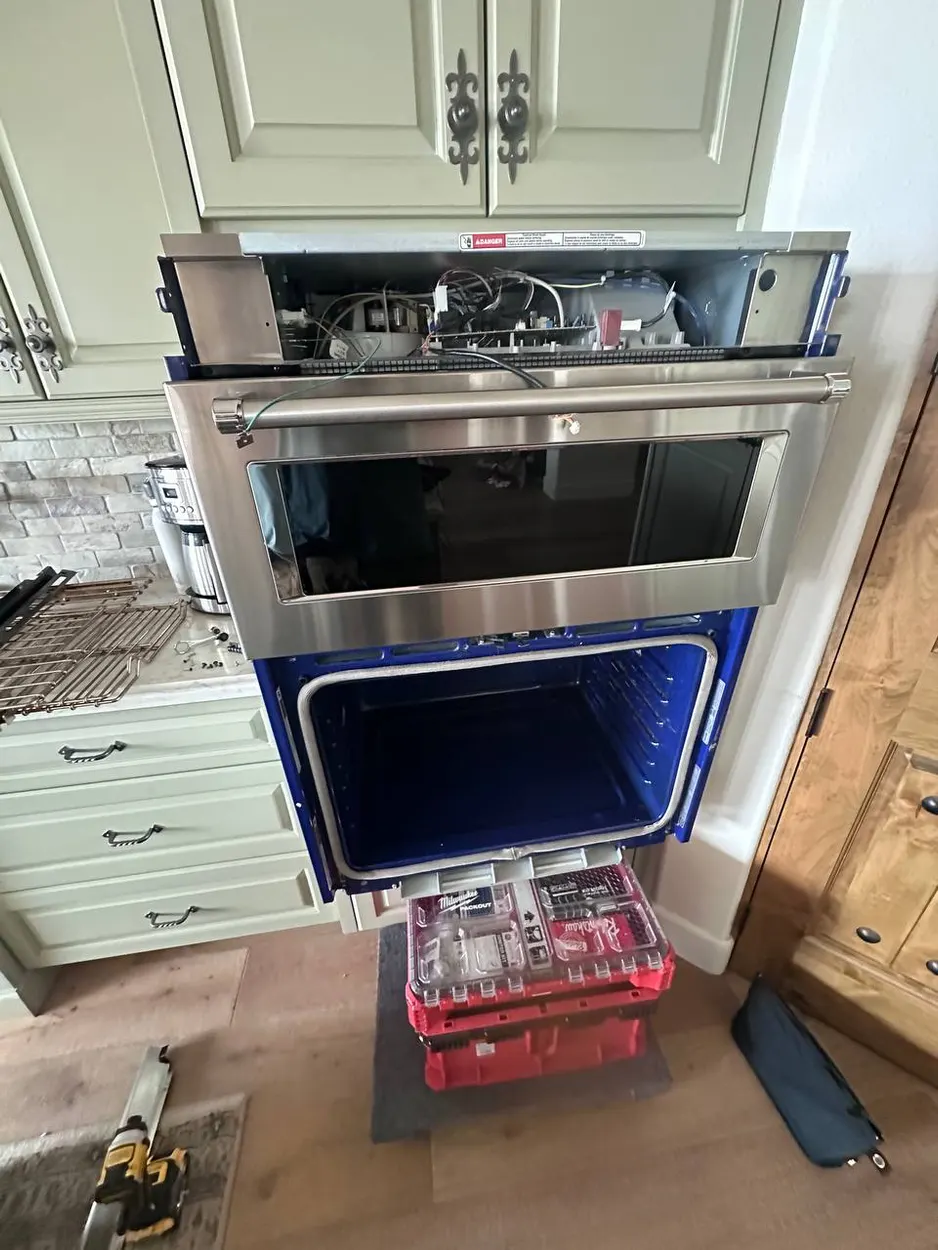
Escondido and Rancho Bernardo kitchens are full of built-in wall ovens, and we treat them as standard work, not a specialty surcharge. A wall oven comes out of its cabinet carefully or not at all — two people, padded floor, trim panels saved. Many repairs skip the pull entirely; elements, sensors, and hinges are often reachable in place. On double ovens, one module usually dies while the other keeps cooking. We repair the failed unit — most often the upper one — without disturbing its healthy twin.
The cutout matters more than the brand. Plenty of local cabinets were cut decades ago for 27-inch ovens, while today's standard runs 30. Keeping the original unit alive often costs less than the carpentry a new size demands. That is one reason wall-oven owners repair longer than range owners do.
When a pull is unavoidable, it follows a routine. Breaker off first, always. Trim screws come out, and the unit slides onto a padded platform set at cabinet height — nothing drags across your floor. A 30-inch single weighs roughly 120 to 180 pounds; doubles push past 250, which is why two of us come. The oven goes back in level and anchored, because a tilted oven bakes tilted cakes.
Fix It or Retire It? How We Decide
An oven is a box with a handful of failure-prone parts, and most of them are cheap relative to the appliance. That is why ovens earn repair more often than almost anything else we service. Our working rule is simple: when the repair lands under half the cost of an equivalent new unit installed, repair wins.
Wall ovens tilt the decision further toward fixing. Replacement means matching the cutout, the electrical feed, and often a discontinued size — the installation alone can rival the repair bill. Freestanding ranges are the opposite: one slides out, a new one slides in. So a major board failure on a budget range may not be worth chasing.
Age matters less than parts availability. A 20-year-old oven with a failed element is an easy yes — elements are generic and plentiful. The same oven with a dead control board needs a parts check first, because some boards are long discontinued. We run that check before ordering anything. If the answer is "retire it," you hear it at the diagnostic stage, not after a wasted week.
What Happens When You Book an Oven Visit
Start with a call or the online form. Tell us the symptom and, if you can find it, the model number — it lives on a sticker inside the door frame or behind the storage drawer. With a model in hand, we load matching elements, igniters, and sensors before leaving Escondido.
You get an arrival window, not an all-day wait. On site, the technician measures instead of guessing: cavity temperature against the dial, current through the igniter, resistance through the elements and sensor. You hear the finding in plain words and see the price on paper before any part leaves the van.
Approve it and the work starts right then. Most oven jobs close inside an hour because the common parts ride with us. Before we pack up, the oven runs a full preheat and holds temperature while we watch — the oven proves itself before we leave. You pay when it works, the $80 diagnostic drops off the bill, and the labor carries its 90-day warranty.
Get Cooking Again Tonight
Call (858) 886-8646 and tell us what the oven is doing — or refusing to do. We answer daily, 7am to 9pm, with one line covering Escondido, San Marcos, Poway, Rancho Bernardo, and Vista. Booking online trims $20 off the bill; seniors (65+) and veterans take $20 off; first responders do too.
Three Recent Customers
Real Google reviews, copied word for word — the standard we aim for on every oven call.
Andrew was very friendly and was able to fix our dryer for a reasonable price. An issue came up a few days later and Andrew was very responsive and quickly came back to resolve it. I highly recommend their services.
Our Whirlpool side-by-side fridge wasn’t cooling. Yurii arrived on time, diagnosed a bad fan motor and had the part with him. He got everything working in under an hour. Honest pricing and great communication.
Frequently Asked Questions
How much does oven repair cost in Escondido?
Bake elements run $250–$320 installed, gas igniters $250–$340, temperature sensors from $250, and door hardware $250–$350. Control boards start near $350 with a written quote first. Each figure already absorbs the $80 diagnostic, which is credited when you approve the repair.
My oven died this morning — can you come today?
Usually, yes. Morning calls most often get a same-day window across Escondido and North County, and we run daily from 7am to 9pm, weekends included. A no-heat oven is a quick diagnosis, and common parts are already in the van.
Is a gas oven that lights slowly safe to use?
No — stop using it. A slow or partial light lets unburned gas pool in the cavity before ignition, which is why it lights with a startling whoosh. The cause is almost always a weakening igniter — a same-visit fix.
Do you repair built-in wall ovens and double wall ovens?
Yes, both. We pull wall ovens from their cabinets when a repair demands it and work in place when it doesn't. On double units we fix the failed module without touching the working one.
Is it worth fixing an oven that's 15 years old?
Often, yes. Ovens are simple machines that outlast most kitchen appliances, and their usual failures are routine parts. If the quote lands under half the price of a comparable new unit, fixing it is the smarter spend. We will tell you plainly when it isn't.
The self-clean cycle finished but the door is still locked. What now?
Give it a full hour to cool — the latch is built to hold until the cavity is safe. Still locked after that? Stop there and don't pry; a bent latch hook turns a small repair into a bigger one. A stalled latch motor or a blown thermal fuse is the usual cause. We release the door by hand and replace the failed part in one visit.
My oven is flashing an F-code. Can I just reset it?
One reset at the breaker is fair — a power glitch can throw a phantom code. If the code returns, write it down exactly and mention it when you call. Codes narrow the fault to a circuit, which means we arrive with the right sensor, latch, or board candidate already on the van.
My oven's real temperature doesn't match the dial. Fixable?
Yes, and it is one of the cheaper fixes. We measure true cavity temperature with our own thermometer first. Drift within about 35 degrees is usually corrected through the control's calibration offset in minutes. Larger errors point to the temperature sensor — or, on older ovens, the mechanical thermostat. Both are replaceable parts.
Brands We Repair
From Samsung and Whirlpool to Sub-Zero and Wolf — we stock parts for every major brand and fix the rest too. Tap yours for repair details and pricing.
No call center, no subcontractors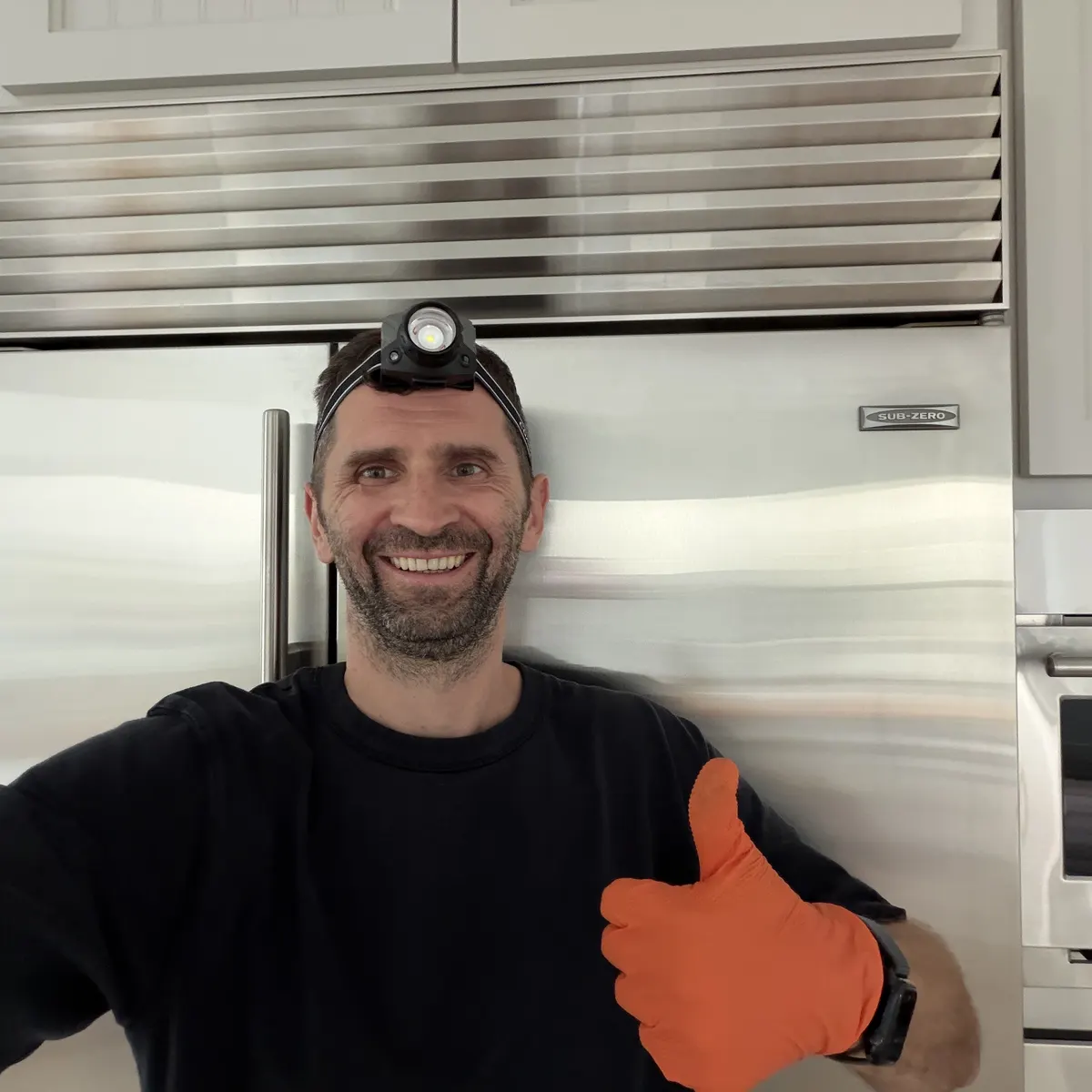

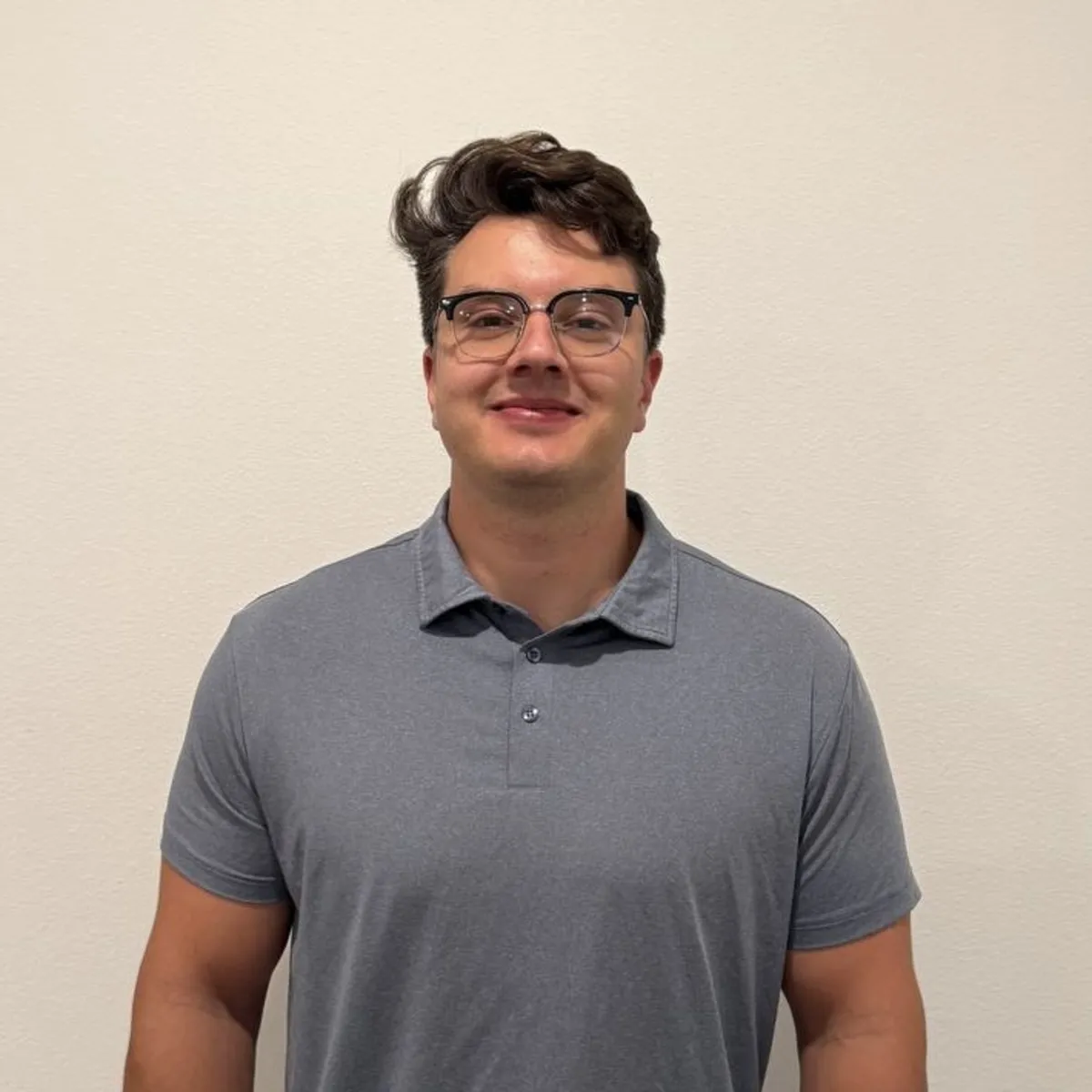
The technicians who show up
Yurii
RefrigerationAndrew
LaundryIgor
KitchenReady When Your Appliance Isn't
Call now or book online — same-day slots across Escondido and North County, 7am–9pm daily. The $80 diagnostic comes off the bill when you approve the repair.