
Andrew arrived within the window of time that we were told he would arrive. He texted when he was on his way and when he arrived. He came in and identified the problem and had the parts with him to make the repairs. He completed the job and cleaned up afterwards. He was courteous. It was a good experience and we would call them again if we have any appliances that needed repairs.
Escondido Stove & Range Repair
When the stove goes down, every meal turns into takeout math. Refrigerator & Appliance Repair – Escondido handles stove repair and range repair in Escondido for gas, electric, glass-top, and induction models, with the same vans covering the inland North County towns around us.
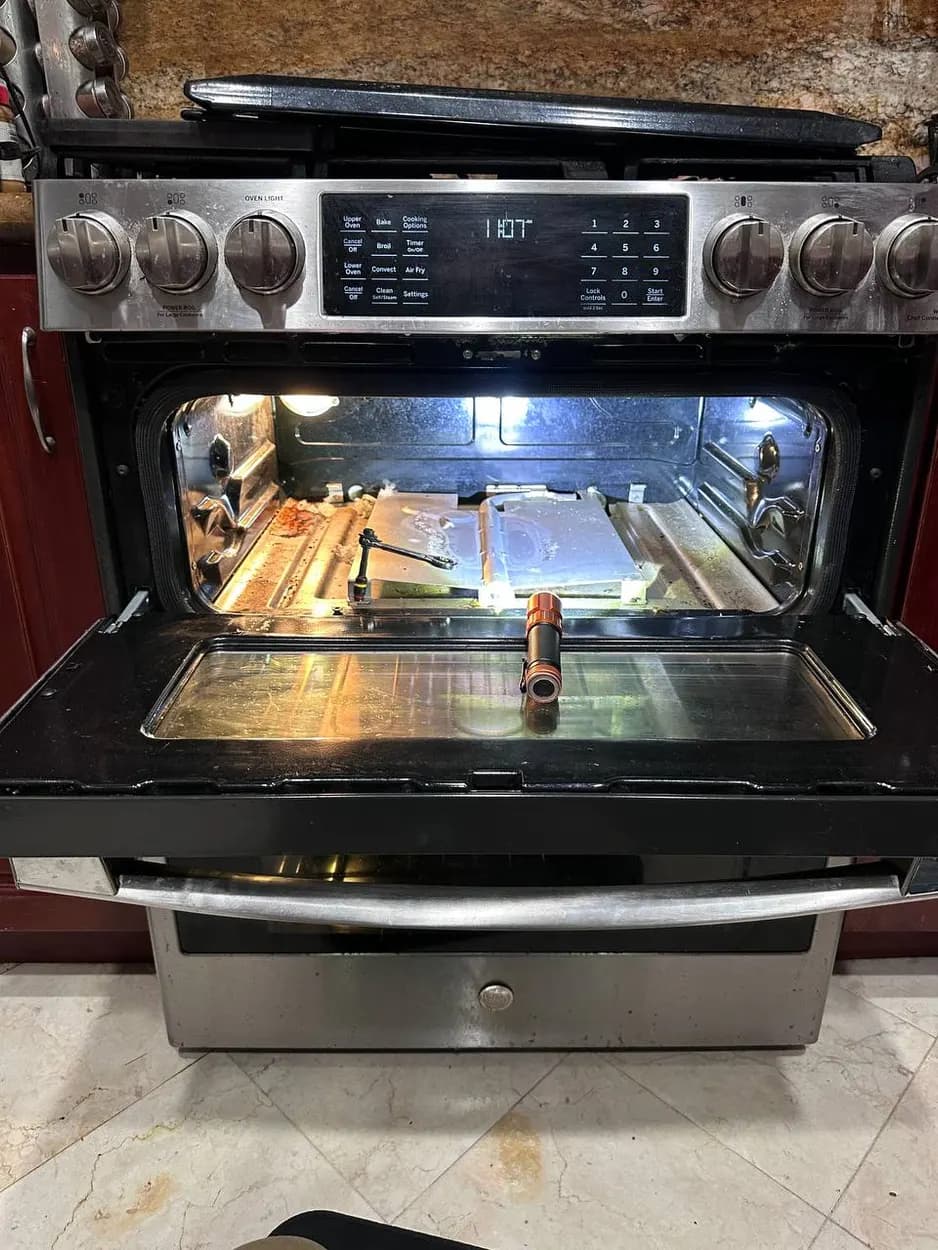
Range Repair Prices, Posted Before We Knock
Most calls get a same-day window. The visit opens with an $80 diagnostic that is deducted from the final bill once you approve the fix, and our labor carries a 90-day warranty. We are a family operation working here since 2018 — reach us daily, 7am to 9pm, at (858) 886-8646.
Most stove and range repairs in Escondido finish between $250 and $360. A burner spark igniter runs $250–$320 installed, a surface element $250–$330, a spark module $260–$350, and an infinite switch starts at $250. The $80 diagnostic comes off whichever repair you approve.
| Diagnosis at your door — deducted from any approved repair | $80 |
| Burner spark igniter (electrode) replacement | $250–$320 |
| Surface element — coil or glass-top radiant | $250–$330 |
| Spark module replacement | $260–$350 |
| Infinite switch (burner heat control) replacement | from $250 |
| Range control board | from $360, exact price on paper after diagnosis |
| Oven igniter or bake element (range oven) | $250–$340 |
| Burner valve & orifice rebuild (gas range) | $250–$400 |
| Selector / function switch replacement | $250–$330 |
| Glass cooktop surface replacement | from $300, written quote after diagnosis |
These figures are typical ranges for reference only — the exact price comes after the $80 diagnostic, before any work begins, and the price you approve is the price you pay.
These figures cover parts and labor on the mass-market brands that fill local kitchens. Control boards sit at the top of the list because the board itself is the expensive piece — labor on a board swap is routine, so you are paying for the electronics, not the hour. Odd or discontinued parts get researched first and priced before you commit to anything. Two broken appliances in one visit? The second machine's diagnosis is $40, not another $80.
Six Range Complaints, and What Each One Usually Means
A gas burner won't light
Turn the knob and nothing happens — no click at all, or a click with no flame. A burner needs three things: a spark, gas at the right pressure, and a clear path for both. Food debris plugging the tiny ports around the burner head beats any actual part failure for frequency. If the ports are clear and the spark looks strong, we test whether gas is truly reaching the burner — a lazy valve or a pinched supply tube starves the flame. Ten minutes of testing names the part. Guessing replaces two.
An electric element stays cold
On a coil-top range, each burner plugs into a receptacle the way a cord plugs into a wall. Coils crack and receptacles char, and either one kills that burner. On a smooth-top, the radiant element hides under the glass and fails invisibly — the indicator light can even stay on while the zone sits cold. We meter the element, then the switch feeding it, and replace only the part that reads dead.
The igniter clicks without stopping
Nonstop clicking is the spark system stuck in the on position, and it has exactly four usual causes — moisture, mess, a cracked electrode, or a stuck spark module. If the clicking started right after a cleaning or a boil-over, give the stove a few hours to dry before booking anyone.
One zone on the glass top is dead
A single dead zone while its neighbors work points below the glass: the radiant element, the switch driving it, or — on fully electronic models — a relay on the main board. We lift the top and meter each suspect in order of price, cheapest first. If the glass itself has cracked, retire the whole surface until it's resolved; liquid working through a crack can short the electronics underneath.
The heat swings or won't simmer
A burner that scorches on Low or crawls on High is not being moody. On electric ranges, the infinite switch cycles power to the element; as it wears, the cycling drifts and your simmer turns into a boil. On gas, the valve's low end clogs or wears out first, because it meters the least gas through the smallest opening. Both are single-part repairs that usually close in one visit.
Knobs, switches, and a burner stuck on High
A knob that spins freely, a stripped stem, or a burner locked at full power all live in the same small neighborhood behind the control panel. A burner that can't leave High is the call we move fastest on — that is a switch or valve failed open, with a scorch risk attached. The plastic knob itself is cheap; what matters is whether the metal shaft behind it survived.
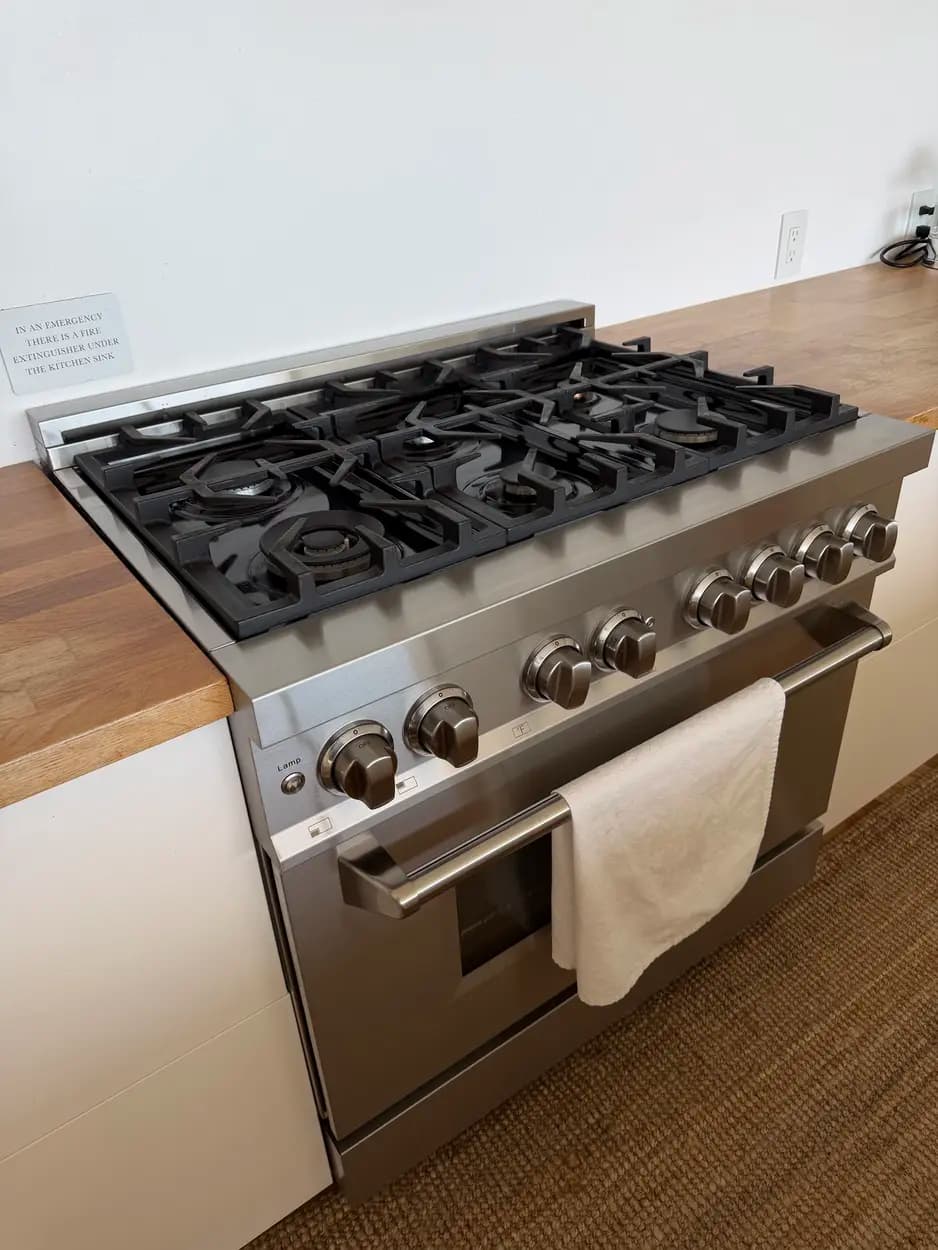
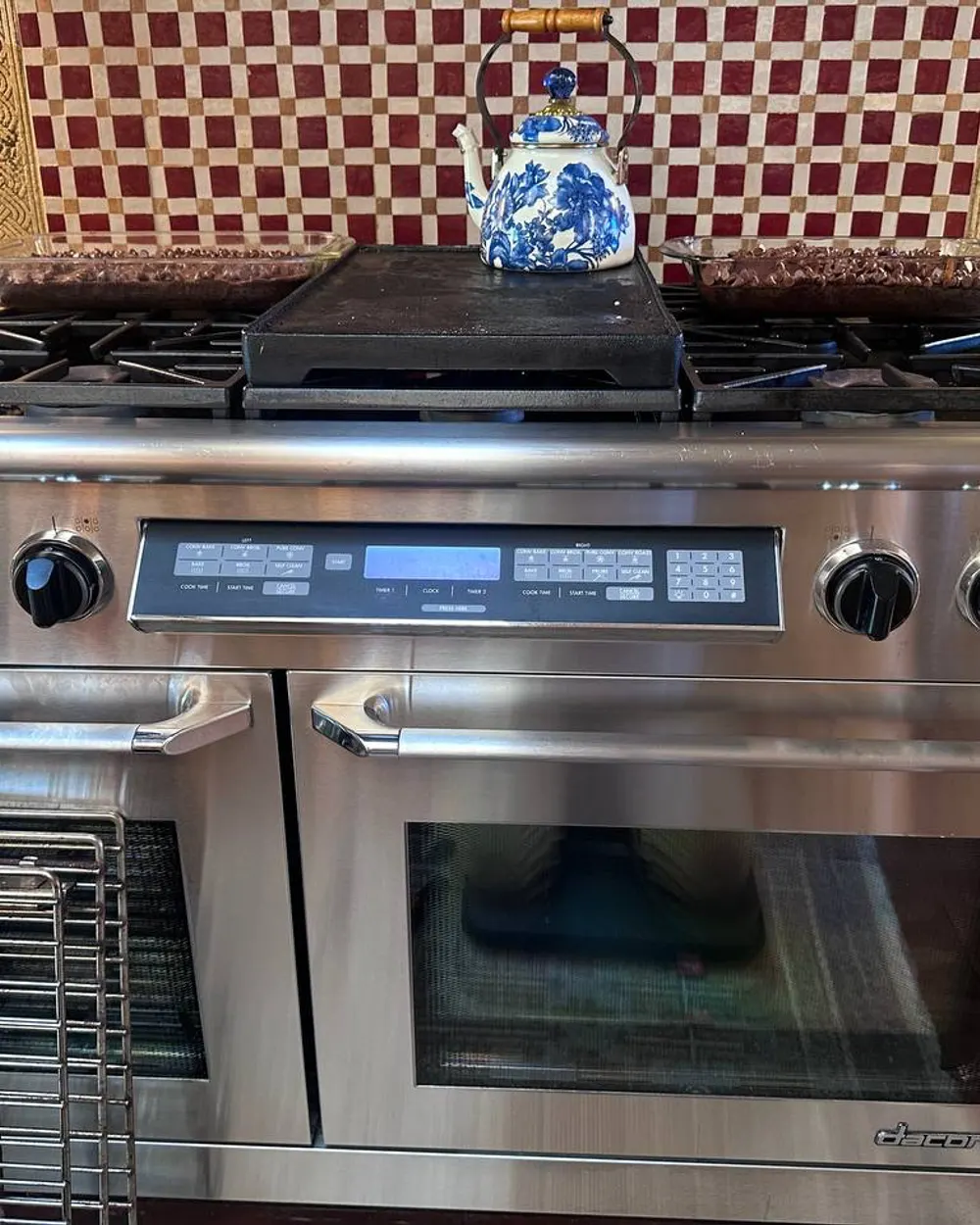
Range, Cooktop, or Wall Oven — What's the Difference?
Half the booking mix-ups we untangle start with naming. These three appliances cook the same dinner but are built — and repaired — differently, so here is the thirty-second sort.
It stands on the floor and the oven is part of it. That is a range — a freestanding or slide-in stove — and you are on the right page. Burners up top, oven below, one cabinet, one gas or electric feed behind it.
It is a flat panel set into the countertop, with no oven attached. That is a cooktop. The machinery is thinner, the mounting is different, and a drop-in glass panel needs its own handling — book it through our cooktop repair page.
The oven sits in the wall at chest height, nowhere near the burners. That is a wall oven, paired with a separate cooktop. Wall-oven trouble — no heat, lockouts, door problems — belongs on our oven repair page, which also covers the oven section inside a range.
Why we bother sorting: the parts do not cross over. A range's spark module, a cooktop's drop-in element, and a wall oven's latch motor are three different inventories on three different shelves. Tell us which of the three you own and the van leaves Escondido stocked for the right machine. And if your range's burners work fine but the oven half is misbehaving, say that too — the oven-section parts ride along.
Inside a Gas Burner — and Why the Clicking Never Quits
A gas burner is four parts pretending to be one: a cap that spreads the flame, a head with a ring of ports, a spark electrode beside it, and a spark module in the back that fires every electrode on the stove. Turn the knob and the module pulses high voltage to the electrode, the spark jumps, the gas catches, and the clicking stops. When the clicking refuses to stop — even with every knob off — one of four things is happening.
Water got where the spark lives. A boil-over or an enthusiastic scrub soaks the electrode's well. Wet porcelain bleeds the spark to ground, so the module keeps firing to compensate. This one cures itself: leave the burner assembled and untouched for several hours, or overnight after a deep clean.
The ports or electrode are dirty. Grease and crumbs bridge the gap the spark needs to jump. The cure is a dry brush and a pin, used gently — no soaking, which restarts cause number one.
The electrode's insulator cracked. A hairline crack in the white ceramic lets the spark escape down the side instead of across the gap. A cracked electrode clicks forever and never lights. That is a replacement part, not a cleaning job.
The spark module is stuck on. The module is a small box that can forget when to stop. A failing one clicks with the knobs off and the stove bone dry — and because one module fires every burner, clicking from all of them at once points there too.
One safety line, and we mean it: clicking is annoying, not dangerous. Gas you can smell while every burner is off is a different animal entirely — that is a call to the gas utility's emergency line before anyone's repair line, ours included. Once they clear the line, we take the appliance side from there.
Five Brands, Five Habits
Samsung electric ranges (model numbers beginning NE) and gas ranges (NX) fill many newer Escondido kitchens. On the electric side we mostly replace radiant elements and the touch-control boards above them; on the gas side, spark electrodes worn down by years of high-heat cooking.
LG smooth-tops often run their burners through the main control board rather than individual switches, so a dead zone gets a board-level test before anyone spends money on parts. Their gas ranges are conventional underneath — electrodes, a module, valves.
GE still builds honest coil-top ranges, and we like servicing them: plug-in elements, replaceable receptacle blocks, and infinite switches that stay available for decades. Many of the oldest working ranges in North County wear a GE badge.
Whirlpool gas ranges — including models with the high-output SpeedHeat burner and the low-flame AccuSimmer burner — come to us most often for spark modules and the igniter switches ganged behind the knobs. Both are standard van stock.
Frigidaire smooth-tops with Quick Boil and SpaceWise expandable elements hand us dual-circuit radiant elements to test. One ring can die while the other keeps glowing, which convinces owners the burner is half-possessed. It is one part.
Induction ranges deserve their own line, because they fail in their own language. There is no element to burn out — a copper coil under the glass excites the pan directly, watched over by a board and a cooling fan. When an induction zone refuses to start, the first suspect is the pan itself: if a fridge magnet will not grip its base flat and hard, the range is doing exactly what it was built to do. Real faults run from a dusty, seized cooling fan that lets the electronics overheat and shut down, to the power board behind it. We test in that order, fan before board, because the fan costs a fraction of the electronics it protects.
We also work on Maytag, KitchenAid, Bosch, and Kenmore ranges — the brands pages carry the model-level detail.
Get the Burners Back Tonight
Tell us what the range is doing — clicking, cold, stuck on High — and we'll tell you what it likely needs and when a tech can stand in front of it. Call (858) 886-8646 any day between 7am and 9pm; one Escondido base covers Escondido, San Marcos, Poway, Rancho Bernardo, and Vista. Booking online takes $20 off the job, seniors 65+ and veterans save $20, and first responders get the same $20 courtesy.
Three Reviews, Unedited
Straight from our Google profile, word for word — the standard every range call is held to.
My GE fridge stopped cooling and I needed it fixed right away. Yurii came out the same day, quickly diagnosed the issue, and had it repaired fast. He even cleaned the condenser coil for free, which I really appreciated. Honest, professional, and reliable service – highly recommend!
Very quick service! Came on the same day I requested assistance. My washing machine was heavily damaged, and instead of drawing it out and giving me a hefty bill they recommended I save some money and buy a new one. Appreciated the honesty and customer first service.
Frequently Asked Questions
How much does stove and range repair cost in Escondido?
Stove and range repair in Escondido runs $250–$360 for most jobs, parts and labor included — call (858) 886-8646 and the $80 diagnostic comes off the bill. Installed prices: burner spark igniter $250–$320, surface element $250–$330, spark module $260–$350, infinite switch from $250, and control boards from $360 with the exact figure on paper first. The $80 diagnostic disappears into whichever repair you approve.
My stove quit this afternoon — how fast can you get here?
Call before mid-afternoon and a same-day window is the usual outcome across Escondido and the nearby North County towns. We run seven days a week, 7am to 9pm. Range diagnosis is quick, and igniters, elements, switches, and spark modules already ride in the van.
I deep-cleaned my glass-top range and now a burner clicks nonstop. Did I break it?
Probably not. Cleaning water settles into the electrode well and grounds out the spark, so the module keeps firing at nothing. Leave the burner assembled, dry, and untouched overnight. If the clicking outlives the drying, the electrode or the spark module needs real attention — a one-visit repair either way.
One burner is dead. Can I keep cooking on the others?
On an electric range, yes — each burner runs its own circuit. On gas, yes, provided there is no gas odor and the dead burner's knob shuts fully off. Any smell of gas while the burners are off changes the answer completely: stop using the stove and call the gas utility before you call anyone else.
The glass top cracked. Is that repairable, or is the range done?
The glass is a replaceable part on most models, and we price it honestly. On some budget ranges the panel costs enough that a new appliance wins, and we will say so to your face. Until it's settled, keep the surface out of service — liquid finding that crack can reach live wiring underneath.
My burner only works on High. What is going on?
The part that meters power or gas to that burner has failed in the open position — an infinite switch on an electric range, a worn valve on gas. Treat it as urgent: a burner you cannot turn down is a scorch and fire risk, not a quirk. Either fix usually closes in a single visit.
Is a 15-year-old range worth fixing?
Usually, yes. Ranges are mechanically simple, and the parts that fail — igniters, elements, switches — cost little next to a new unit. The honest exception is a major board failure on a budget freestanding model, where a replacement slides into the same gap with zero installation drama. We lay out both numbers at the diagnostic and you choose.
What does the 90-day warranty cover?
Our labor on the repair, for 90 days. If the burner, element, or module we fixed fails the same way again, the return visit costs you nothing. It protects the work we performed — a new, unrelated failure elsewhere on the range would be its own diagnosis.
Brands We Repair
From Samsung and Whirlpool to Sub-Zero and Wolf — we stock parts for every major brand and fix the rest too. Tap yours for repair details and pricing.
No call center, no subcontractors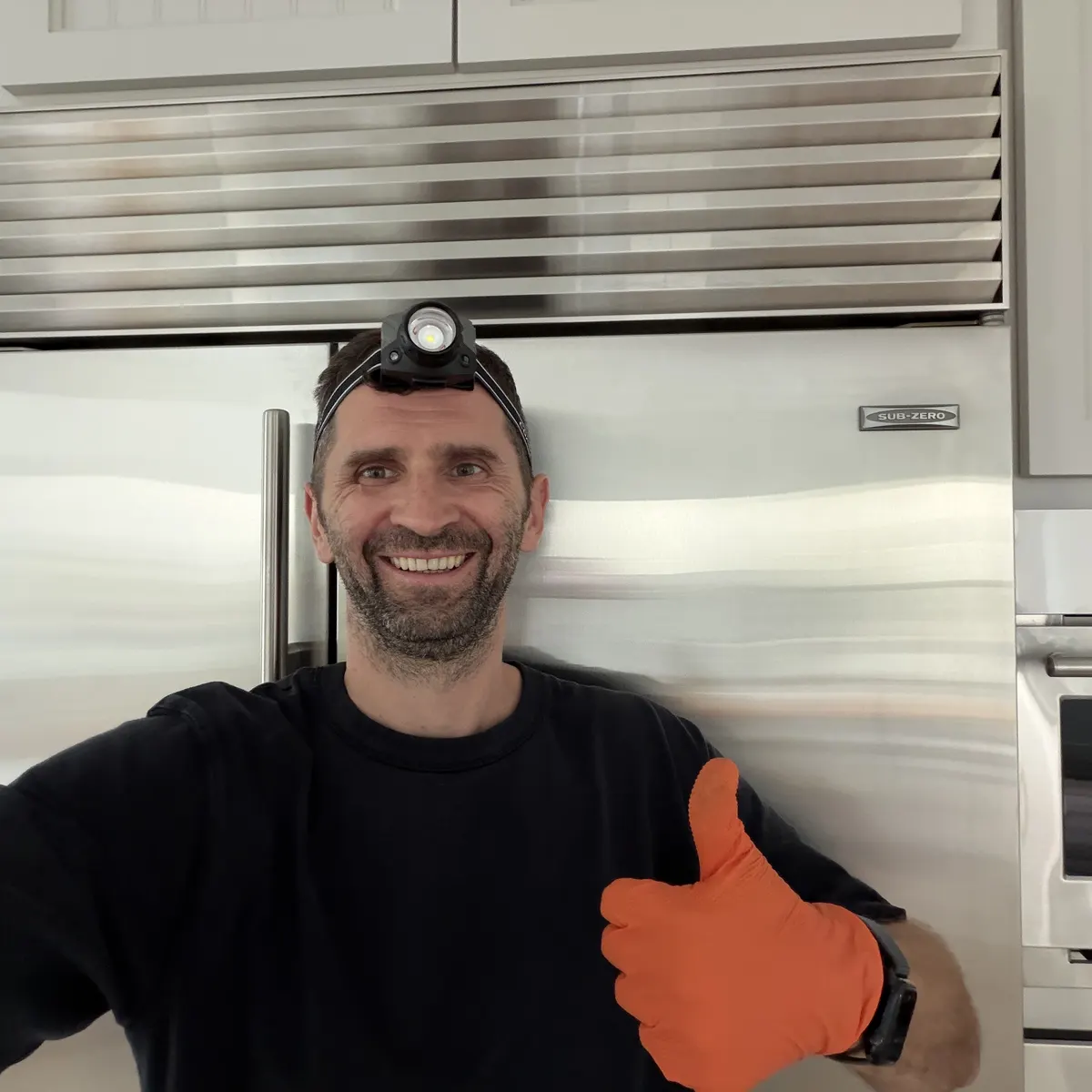
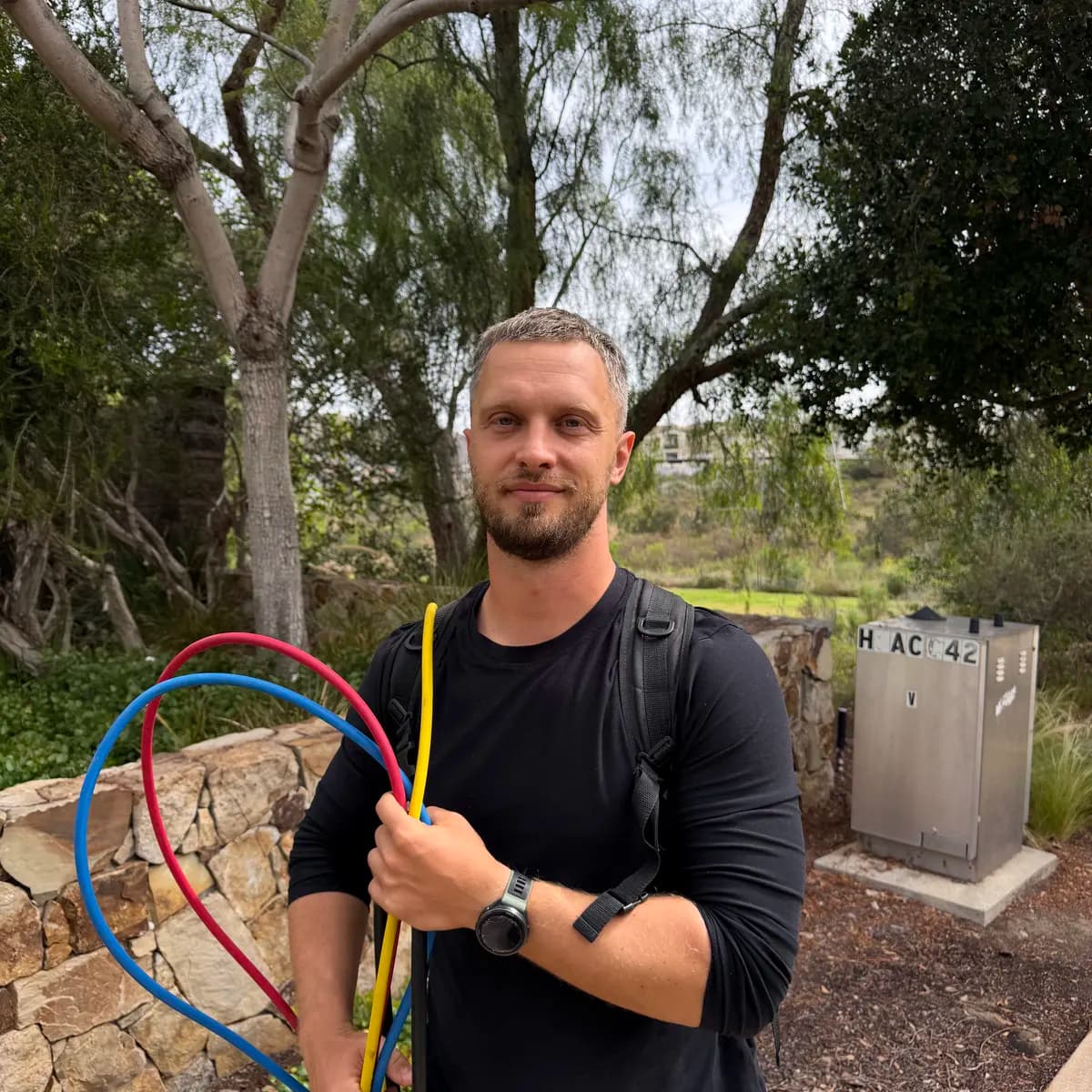
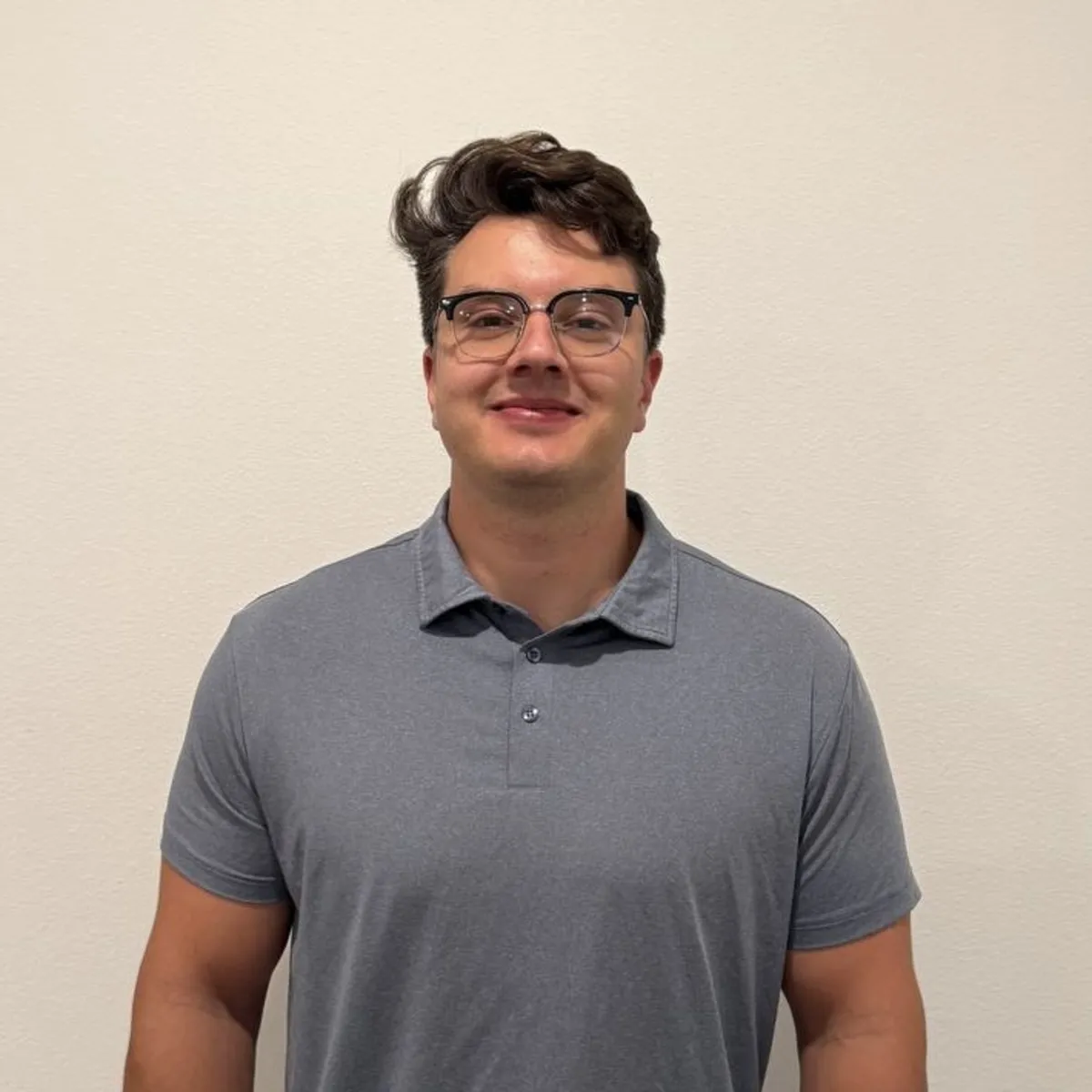
The technicians who show up
Yurii
RefrigerationAndrew
LaundryIgor
KitchenReady When Your Appliance Isn't
Call now or book online — same-day slots across Escondido and North County, 7am–9pm daily. The $80 diagnostic comes off the bill when you approve the repair.