
Samsung Washer Maintenance Guide — 5 Tasks That Prevent Mold, Odor, and Expensive Repairs
Samsung front-load washers are popular for a reason — they're efficient, quiet, and handle large loads well. But they have one well-known weakness: if you don't maintain them, they develop mold and mildew inside the door seal, start smelling terrible, and eventually cost you hundreds in repairs that could have been avoided.
We repair Samsung washers in the Escondido area every week, and the majority of service calls come down to the same thing: deferred maintenance. A clogged drain filter, a moldy gasket, an out-of-level machine vibrating itself apart. All of it preventable with about 20 minutes of effort each month. Here's what actually matters.
Task 1: Clean and Dry the Door Gasket — After Every Load
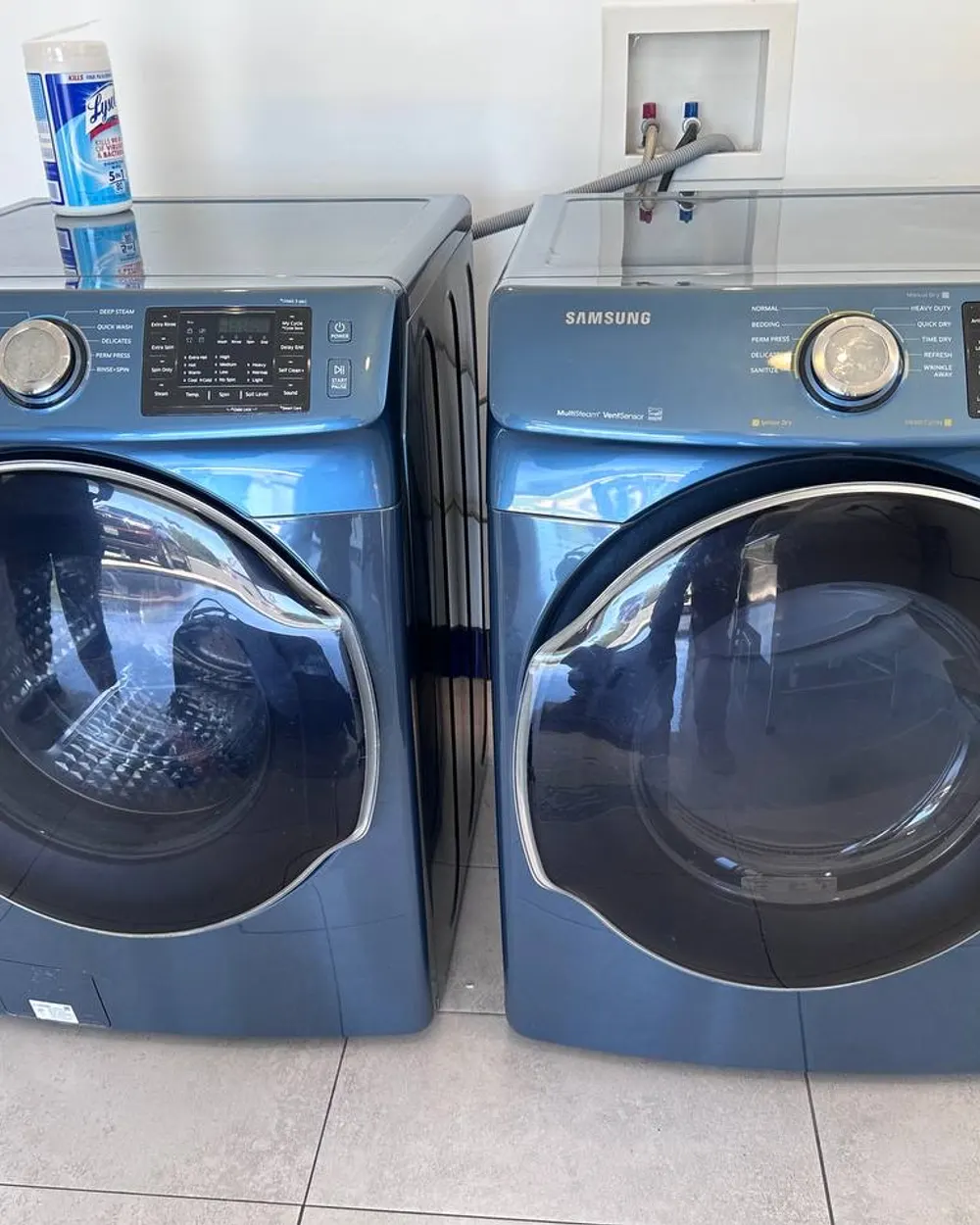
The rubber gasket (door boot seal) on Samsung front-load washers is the number-one mold and odor hotspot. Water, detergent residue, and lint collect in the folds of the gasket after every wash cycle. If you close the door and leave it, mold grows within days — especially in Southern California's climate where humidity spikes seasonally.
How to maintain it: After every load, wipe the gasket folds with a dry cloth. Pull the gasket away from the door frame gently and wipe inside the fold, especially the bottom section where water pools. Leave the door slightly open between loads to let air circulate and moisture evaporate.
Deep clean monthly: Mix equal parts white vinegar and water in a spray bottle. Spray the entire gasket, let it sit for 5 minutes, then wipe clean. For existing mold stains, use a baking soda paste. Never use bleach on the gasket — it degrades the rubber over time and will cause the seal to crack and leak.
Task 2: Run the Self-Clean Cycle — Monthly
Samsung washers have a built-in Self Clean or Pure Cycle function. This runs a high-temperature cycle with no clothes to flush out residue from the drum, hoses, and pump. Samsung recommends running it every 40 washes, but once a month is easier to remember and just as effective.
How to run it: Select Self Clean from the cycle menu (no detergent needed for the basic cycle). For extra cleaning, add one cup of white vinegar directly to the drum. Run the full cycle. After the cycle finishes, wipe the drum and gasket dry.
Why it matters: Detergent residue and fabric softener build up inside the drum, pump, and hoses. Over time, this creates a biofilm that smells and eventually clogs the drain system. A monthly self-clean cycle dissolves this buildup before it becomes a problem.
Task 3: Clean the Drain Pump Filter — Monthly
Samsung front-load washers have a small debris filter at the bottom-front of the machine, behind an access panel. This filter catches coins, hair ties, buttons, and other small objects before they reach the drain pump. When it clogs, the washer drains slowly, leaves clothes wetter than usual, or throws an error code.
How to clean it: Place a shallow pan or towels under the access panel (water will come out). Open the panel, pull the drain hose plug first and let residual water drain into the pan. Then twist the filter counterclockwise and pull it out. Clean off any debris, hair, or lint. Check inside the filter housing for anything stuck. Reinstall the filter, close the panel.
Pro tip: if you wash a lot of pet-owner laundry (pet hair, bedding), clean this filter every two weeks instead of monthly. Pet hair is the fastest way to clog a Samsung drain filter.
Task 4: Check and Adjust Leveling — Every 6 Months
A washing machine that's not level vibrates excessively during spin cycles. Over time, this vibration loosens internal components, wears out shock absorbers faster, damages the drum bearings, and can even crack the outer tub. It also makes the washer walk across the floor, straining the drain hose and water connections.
How to check: Place a bubble level on top of the washer, front to back and side to side. All four feet should be firmly on the floor with no wobble. Adjust the leveling feet by turning them (most Samsung models have threaded feet that you turn clockwise to raise or counterclockwise to lower). After leveling, tighten the lock nuts against the washer base to prevent the feet from shifting.
Task 5: Use the Right Detergent — Every Load
This isn't a periodic task — it's an every-load discipline that most Samsung washer owners get wrong. Front-load washers require HE (High Efficiency) detergent. Regular detergent produces too many suds, which don't rinse out fully, leave residue on clothes and inside the machine, and accelerate mold growth.
Rules: Always use HE-marked detergent. Use only 2 tablespoons per load (not the full cap — detergent companies want you to use more). Avoid liquid fabric softener entirely if possible — it's the biggest contributor to gasket mold. Use dryer sheets instead if you want softness. If you've been using non-HE detergent, run two consecutive Self Clean cycles to flush the residue.
When Maintenance Isn't Enough
If your Samsung washer already has persistent mold odor that won't go away, excessive vibration on a level machine, standing water after cycles, or error codes (UE, 5E, dC), the problem has moved past maintenance into component failure territory. Common Samsung washer repairs include door gasket replacement, shock absorber replacement, drain pump service, and bearing replacement.
Our technicians service Samsung washers throughout the Escondido area. Every repair starts with a $80 diagnostic — applied toward your repair cost — and comes with a 90-day guarantee on parts and labor.
Maintenance schedule — quick reference
| Task | Frequency |
|---|---|
| Wipe door gasket | After every load |
| Run Self Clean cycle | Monthly |
| Clean drain pump filter | Monthly |
| Check leveling | Every 6 months |
| Use HE detergent only | Every load |
Samsung washer smelling bad, vibrating too much, or not draining right?
We'll get it sorted same-day. $80 diagnostic applied toward repair · 90-day guarantee · Call (858) 886-8646
Open Daily 7am–9pm
Call Now: (858) 886-8646 — Book Online & Save $20
Walked Through It and It Still Won't Cooperate?
Some fixes need a meter, a part, and a second pair of hands. Call us or book online — the $80 diagnostic comes off the bill when you approve the repair.