
LG Refrigerator Maintenance Guide — 6 Tasks That Extend the Life of Your Fridge
LG refrigerators are built to last 15–20 years, but the biggest factor in whether yours hits that mark is maintenance. The compressor, the most expensive component in any refrigerator, is designed to run efficiently under specific conditions — clean coils, proper airflow, correct temperature, and sealed door gaskets.
When any of these degrade, the compressor works harder, runs hotter, and fails sooner. We repair LG refrigerators across the Escondido area regularly, and the pattern is consistent: most compressor failures and sealed-system repairs we see could have been delayed or avoided entirely with basic maintenance. This guide covers the six tasks that have the biggest impact on LG fridge longevity.
Task 1: Clean the Condenser Coils — Every 6 Months
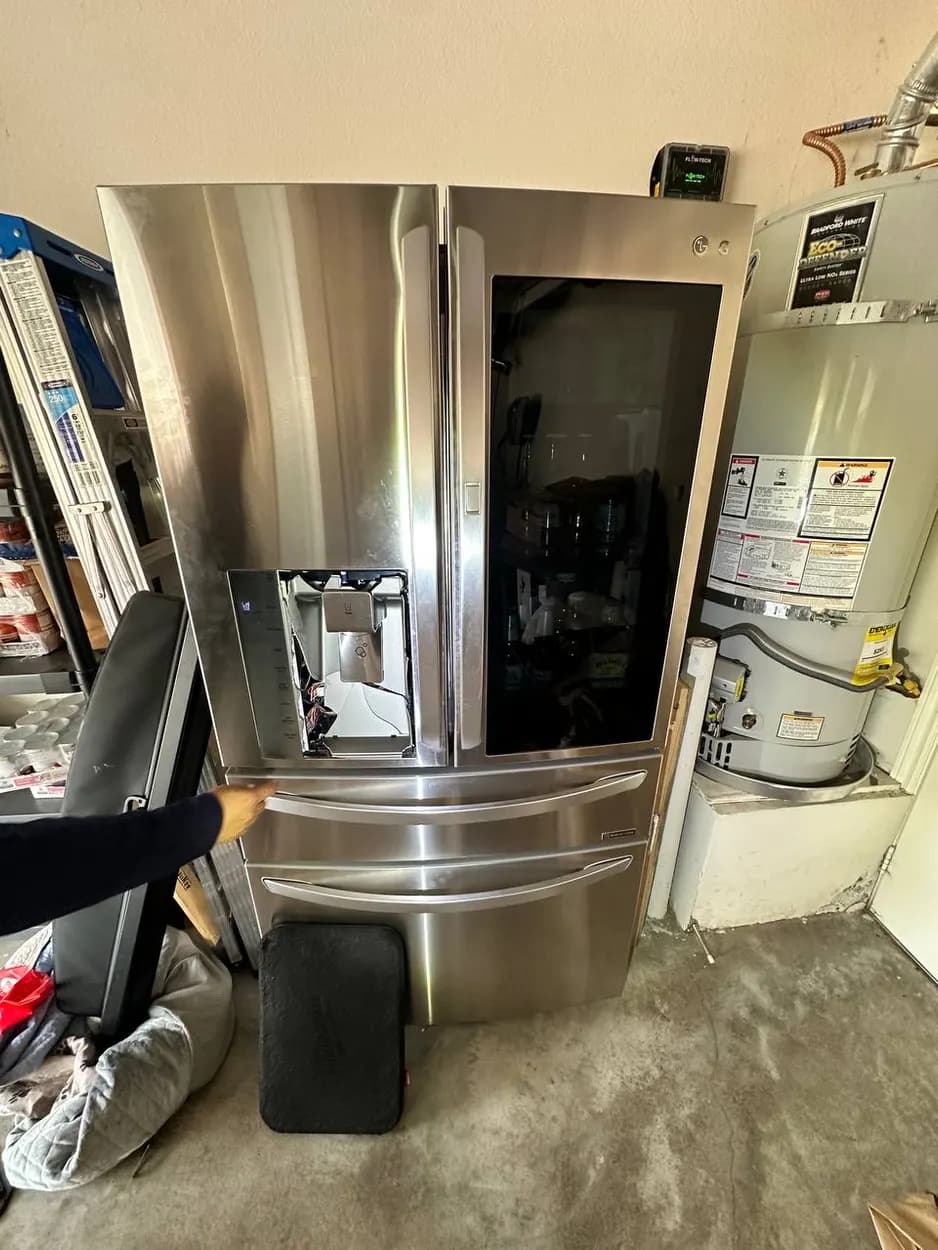
The condenser coils dissipate heat from the refrigerant as it cycles through the system. On most LG refrigerators, the coils are located at the bottom-rear or bottom-front of the unit, behind a grille or access panel. When dust, pet hair, and kitchen grease coat these coils, they can't release heat efficiently. The compressor compensates by running longer and hotter.
How to clean them: Unplug the refrigerator or pull the power cord (this is important — the condenser fan can start while you're working). Remove the grille or rear access panel. Use a condenser coil brush (a long, narrow bristle brush available at any hardware store for about $10) to loosen dust from the coils. Vacuum up the loosened debris. Replace the panel. Plug back in.
Impact: Dirty condenser coils can increase energy consumption by 25–30% and raise compressor operating temperature significantly. In Escondido's warmer months, clean coils are even more critical because ambient temperatures are already high.
Task 2: Inspect and Clean Door Seals — Every 3 Months
The magnetic door gaskets on your LG refrigerator create an airtight seal when the door closes. When gaskets are dirty, cracked, or deformed, warm air leaks in constantly. The refrigerator detects the temperature rise and runs the compressor more to compensate. Your energy bill goes up, and the compressor wears faster.
How to check the seal: Close the door on a dollar bill so it's half in and half out. Pull the bill out — you should feel noticeable resistance. If the bill slides out easily, the gasket isn't sealing at that point. Test at multiple spots around the door (top, bottom, sides, corners). Pay special attention to the bottom, where gaskets sag first.
How to clean: Wipe gaskets with warm soapy water and a soft cloth. Clean inside the folds where food residue and mold hide. Dry thoroughly. If the gasket is cracked, torn, or permanently deformed, it needs to be replaced — no amount of cleaning will restore a compromised seal.
Task 3: Verify Temperature Settings — Every 3 Months
LG recommends 37°F for the fridge compartment and 0°F for the freezer. These aren't arbitrary numbers — they're the sweet spot for food safety and energy efficiency. Every degree colder costs extra energy, and every degree warmer shortens food shelf life.
How to check: Place an appliance thermometer (not a meat thermometer) in the center of the middle shelf and leave it for 24 hours. Compare the reading to the display setting. If the actual temperature is 5°F or more off from the set temperature, the temperature sensor or control board may need attention. For readings that are slightly off (2–3°F), LG's settings panel allows manual calibration.
Task 4: Replace the Water Filter — Every 6 Months
If your LG refrigerator has a built-in water dispenser or ice maker, it has a water filter that needs regular replacement. LG uses the LT1000P or LT700P filter on most models. These filters remove chlorine, sediment, and contaminants from your water supply, but their capacity is limited.
When to replace: Every 6 months, or when the filter indicator light turns red. Using the filter beyond its rated life doesn't just reduce water quality — a clogged filter restricts water flow to the ice maker, causing thin or hollow ice cubes and reducing ice production. It can also cause the water dispenser to slow to a trickle.
How to replace: Locate the filter (on most LG models, it's inside the fridge compartment in the upper-left corner). Twist the old filter counterclockwise and pull out. Insert the new filter and twist clockwise until it clicks. Run 2–3 gallons of water through the dispenser to flush the new filter. Reset the filter indicator on the control panel.
Task 5: Clear the Defrost Drain — Annually
During normal operation, frost builds up on the evaporator coils inside the freezer and is melted during automatic defrost cycles. The meltwater drains through a small channel at the back of the freezer into a drain pan under the fridge, where it evaporates. If this drain channel gets blocked by ice or debris, water backs up, pools inside the freezer, and eventually leaks onto the floor.
How to check: Look at the back wall of the freezer compartment, near the bottom. If you see ice buildup along the bottom or water pooling in the freezer, the drain is likely blocked. Pour about half a cup of warm water down the drain hole to melt any ice blockage. Use a pipe cleaner or flexible brush to clear the channel.
Task 6: Clean the Ice Maker — Every 3 Months
If your LG fridge has a built-in ice maker, mineral deposits from your water supply gradually build up on the ice mold, the water inlet, and the ejector mechanism. This affects ice quality (cloudy, off-taste, or oddly shaped cubes) and can eventually cause the ice maker to jam or stop producing altogether.
How to clean: Turn off the ice maker. Remove the ice bin and wash it with warm water and mild dish soap (never use hot water, which can warp the plastic). Wipe the ice mold area with a soft cloth dampened with a 50/50 vinegar-water solution. Turn the ice maker back on. Discard the first two batches of ice.
When Maintenance Isn't Enough
If your LG refrigerator is running constantly, not cooling to the set temperature, leaking water on the floor, or making unusual noises despite clean coils and good gaskets, the problem is likely a component failure — compressor start relay, evaporator fan motor, defrost heater, or temperature control board. These require professional diagnosis.
Our technicians service LG refrigerators throughout the Escondido area. We carry LG-specific diagnostic tools and the most common replacement parts. Every repair begins with a $80 diagnostic — applied toward your total repair cost — and includes a 90-day guarantee.
Maintenance schedule — quick reference
| Task | Frequency |
|---|---|
| Clean condenser coils | Every 6 months |
| Inspect and clean door seals | Every 3 months |
| Verify temperature settings | Every 3 months |
| Replace water filter | Every 6 months |
| Clear defrost drain | Annually |
| Clean ice maker | Every 3 months |
LG refrigerator not cooling like it should?
Despite clean coils and good gaskets, that points to a component failure — we'll diagnose it same-day.
$80 diagnostic applied toward repair · 90-day guarantee
Open Daily 7am–9pm
Call Now: (858) 886-8646 — Book Online & Save $20
Walked Through It and It Still Won't Cooperate?
Some fixes need a meter, a part, and a second pair of hands. Call us or book online — the $80 diagnostic comes off the bill when you approve the repair.