
LG Dryer Repair in Escondido — Running but Not Heating
The Call
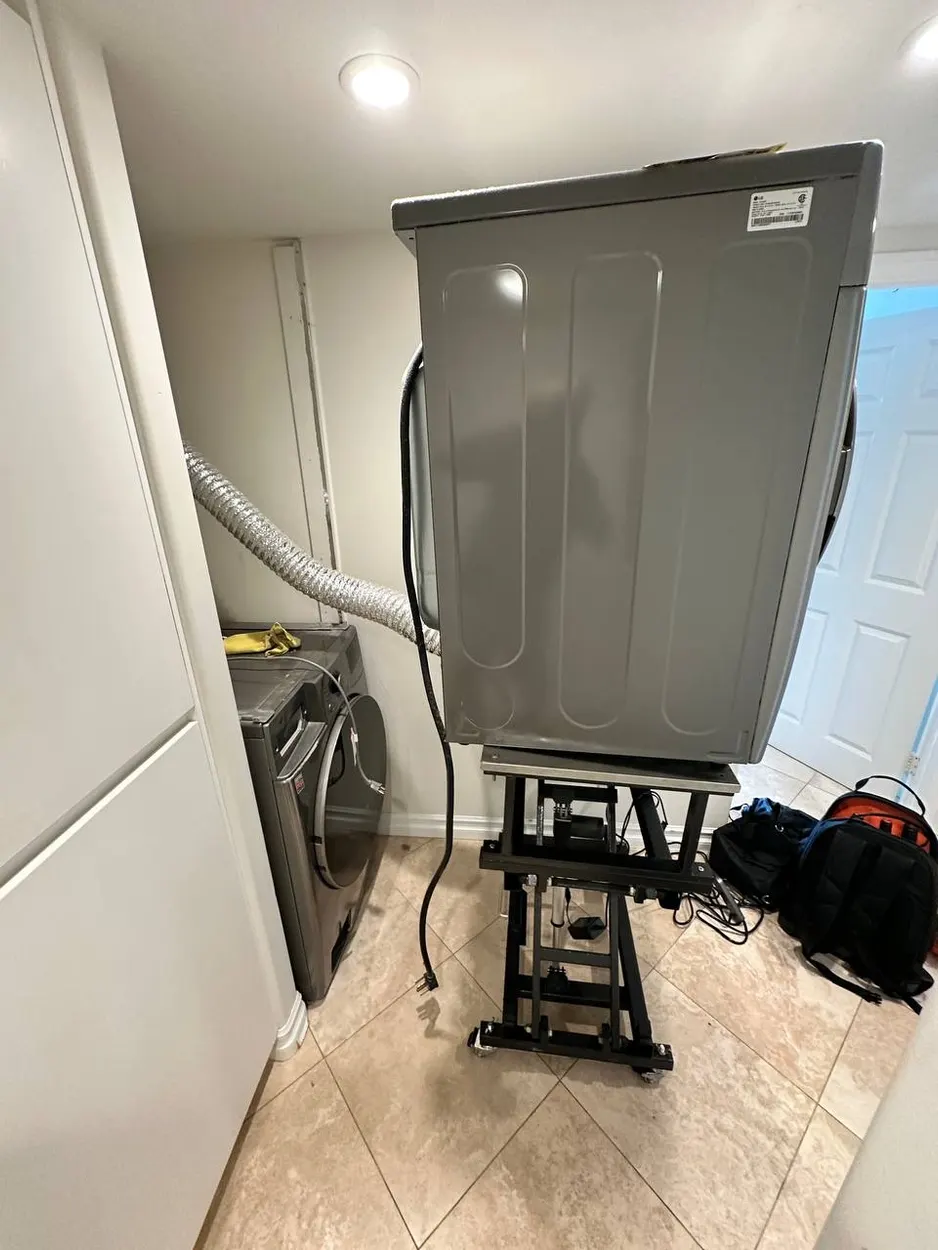
A family in Escondido called us on a Monday morning. Their LG DLE7300WE — a 7.4-cubic-foot electric dryer — was running full cycles but the clothes came out cold and damp. The drum was spinning, the timer was counting down, everything seemed normal except the heat. They had tried cleaning the lint filter and checking the vent hose, but nothing helped.
LG electric dryers that run without heat are one of our most frequent service calls. The DLE7300 is a well-built unit with LG's ThinQ smart diagnostics, but the heating circuit has several components that can fail independently — and when one goes, the dryer keeps running but produces no heat at all.
Why LG Dryers Lose Heat
Electric dryers generate heat by passing current through a heating element — a coiled nichrome wire inside a metal housing. The circuit runs through several safety devices: a thermal fuse, a high-limit thermostat, and a cycling thermostat. If any of these devices trips or fails, the heating element loses power while the drum motor continues running normally.
The thermal fuse is a one-shot device. Unlike a thermostat that resets, a blown thermal fuse stays open permanently and must be replaced. It blows when the exhaust temperature exceeds safe limits, usually because of restricted airflow. The most common trigger is a clogged dryer vent duct — not the lint trap, but the duct that runs from the back of the dryer to the outside wall.
Less common causes include a failed heating element itself (the coil breaks and opens the circuit), a defective cycling thermostat (stays open instead of cycling), or a control board issue where the relay that powers the heater fails.
On-Site Diagnosis
Our technician arrived that afternoon. The first thing he checked was the vent duct. He disconnected it from the back of the dryer and ran a quick airflow test — good airflow, no blockage. Lint trap was clean too. So the restricted-airflow cause was ruled out quickly.
Next step: accessing the heating circuit components. On the DLE7300, the thermal fuse and high-limit thermostat are located on the blower housing at the back of the dryer. After pulling the unit away from the wall and removing the rear access panel, he tested the thermal fuse with a multimeter. Zero continuity — the fuse was blown.
He also tested the high-limit thermostat (good — showed continuity), the heating element (good — 15 ohms resistance, within spec), and the cycling thermostat (good). Only the thermal fuse had failed. Since the vent wasn't blocked, the fuse likely blew during a one-time event — maybe a heavy blanket load that temporarily restricted internal airflow past the heating element.
The Repair
Replacing a thermal fuse on an LG DLE7300 is straightforward once you have access. The fuse is held by two screws and connects with two spade terminals. Our technician:
- Disconnected power at the outlet.
- Removed the two mounting screws holding the blown fuse to the blower housing.
- Disconnected the wire terminals (noting their position).
- Installed the new OEM thermal fuse (LG part 6931EL3003D).
- Reconnected the wiring, reinstalled the rear panel, and pushed the dryer back.
- Ran a timed dry cycle on high heat and verified the exhaust temperature reached 135°F within 5 minutes.
Total time on-site was about one hour, including diagnosis and testing. The dryer was heating normally before we left, and we confirmed it completed a full cycle with properly dried clothes.
Signs Your LG Dryer's Thermal Fuse Is Blown
Before calling for service, check for these indicators:
- The drum spins and the timer runs, but there is zero heat — not reduced heat, but no heat at all.
- The vent hose is clear (disconnect it and run the dryer briefly — you should feel strong airflow from the exhaust port).
- Restarting the dryer does not help.
- The lint trap is clean.
If all four apply, a blown thermal fuse is the most likely cause.
Note: on some LG models, a blown thermal fuse also disables the drum motor entirely. If your dryer won't start at all, the thermal fuse is still a strong suspect.
Case Summary
| Appliance | LG DLE7300WE (7.4 cu ft electric dryer) |
| Problem | Running but not heating — blown thermal fuse |
| Warranty | 90-day guarantee on parts and labor |
| Time on-site | About 1 hour |
| Solution | OEM thermal fuse replacement (LG 6931EL3003D) |
LG dryer running but not heating?
Don't waste energy on cold cycles — we'll have it fixed same-day.
$80 diagnostic applied toward repair · 90-day guarantee
Open Daily 7am–9pm
Call Now: (858) 886-8646 — Book Online & Save $20
Walked Through It and It Still Won't Cooperate?
Some fixes need a meter, a part, and a second pair of hands. Call us or book online — the $80 diagnostic comes off the bill when you approve the repair.