
KitchenAid Refrigerator Repair in Escondido — Fridge Warm but Freezer Still Cold
The Call
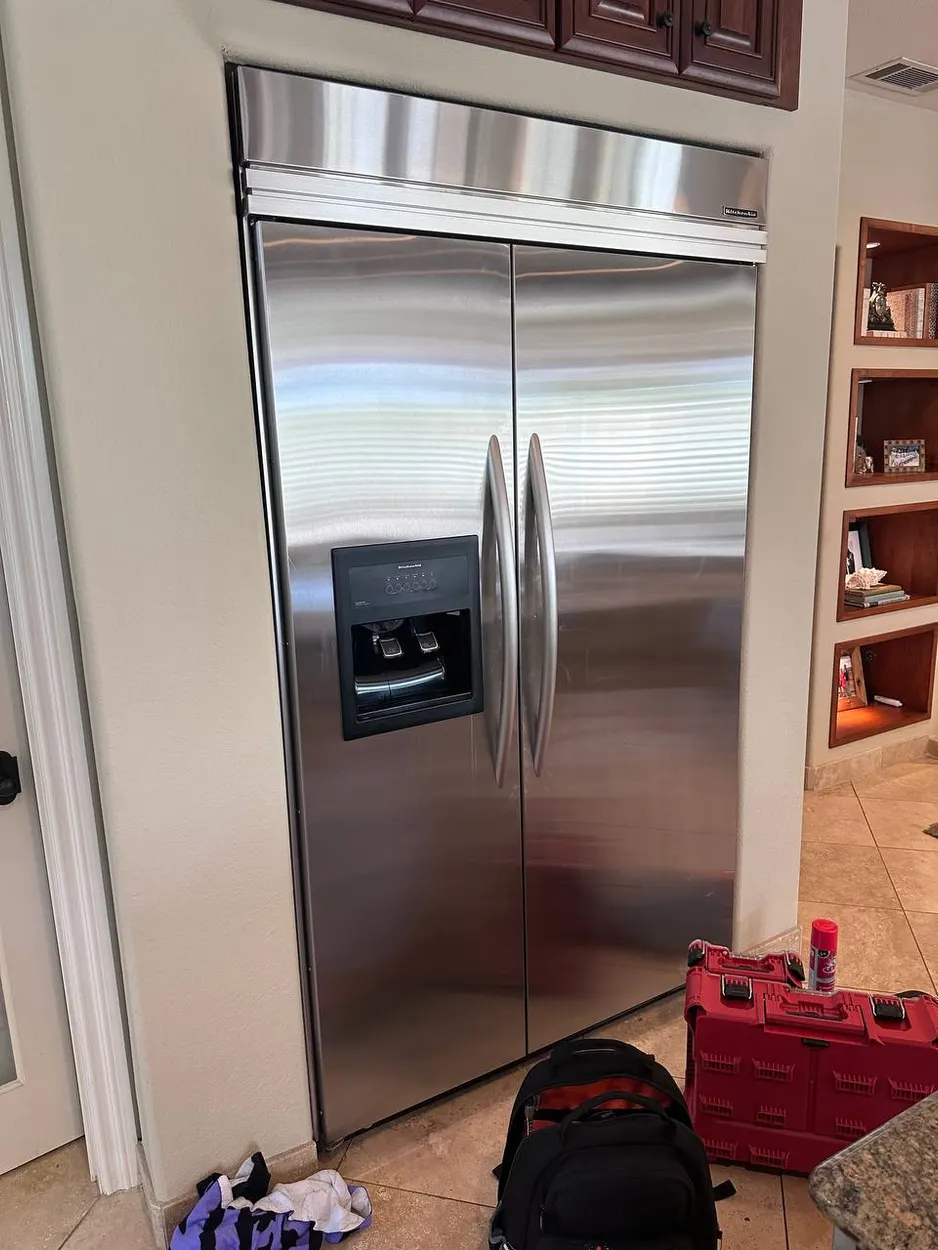
We received a call from an Escondido homeowner whose KitchenAid KRSF505ESS — a 25-cubic-foot side-by-side refrigerator — had a puzzling problem. The freezer side was working perfectly, keeping ice cream solid and frozen food at zero degrees. But the refrigerator side was climbing past 50°F. Milk was warm, vegetables were wilting, and they were running out of cooler space.
This is a classic symptom pattern on KitchenAid and Whirlpool-platform side-by-side refrigerators. When the freezer cools fine but the fridge doesn't, the compressor and sealed system are working — which is the good news, because those are the expensive repairs. The problem is usually in the airflow path between the freezer and the fridge compartment.
How Cold Air Reaches the Fridge Side
In a side-by-side refrigerator, the evaporator coils are located in the freezer compartment. A fan blows cold air across these coils, and some of that air is directed through a damper into the refrigerator side. The system depends on three things working together: the evaporator fan circulating air, the damper opening to let cold air through, and the condenser fan at the bottom-rear keeping the compressor and condenser coils cool enough to operate efficiently.
When any of these three components fails, the fridge side warms up while the freezer may continue to work — at least for a while. Over time, if the condenser fan fails, the compressor overheats, the freezer eventually warms too, and the whole system stops cooling. Catching it early — when only the fridge side is affected — usually means a simpler and cheaper repair.
On-Site Diagnosis
Our technician arrived and started with the basics. Freezer: -2°F (good). Fridge: 52°F (should be 37°F). Compressor was running. He opened the freezer and checked the evaporator fan — spinning normally, good airflow. He checked the air damper between freezer and fridge — it was open and unobstructed.
Then he pulled the refrigerator away from the wall and listened. The condenser fan at the bottom-rear was silent. He removed the access panel and found the condenser fan motor completely seized. The fan blade wouldn't turn by hand. Dust and lint had accumulated around the motor housing over the years, and the motor bearings had worn out.
With the condenser fan dead, the condenser coils were overheating. The compressor was running longer cycles and struggling to maintain temperature. The freezer — being closest to the evaporator — stayed cold enough, but the fridge side, which depends on redirected cold air and efficient system operation, couldn't keep up.
The Repair
Condenser fan motor replacement on the KRSF505ESS is a rear-access repair:
- Unplugged the refrigerator.
- Removed the rear lower access panel (4 screws).
- Disconnected the fan motor wiring harness.
- Removed the old motor and fan blade assembly (3 mounting screws).
- Cleaned the condenser coils with a coil brush and vacuum — they were heavily coated with dust.
- Installed the new OEM condenser fan motor.
- Reinstalled the fan blade and access panel.
- Powered on and verified the fan was running and moving air across the condenser coils.
Within two hours of the repair, the fridge compartment had dropped from 52°F to 41°F. We told the homeowner to expect it to reach the target 37°F within 4–6 hours as the system stabilized. We also showed them how to vacuum the condenser coils every 6 months to prevent this from happening again.
Warning Signs to Watch For
A failing condenser fan often gives warning signs before it dies completely:
- The refrigerator runs more than usual — the compressor seems to never shut off.
- You hear a buzzing or humming from the bottom-rear of the unit that's louder than normal.
- The area around the bottom of the fridge feels warmer than it should.
- Food in the fridge section takes longer to cool down after you put it in.
If you notice these signs, clean the condenser coils first. If the symptoms persist, the fan motor may be on its way out. Our technicians service KitchenAid refrigerators across the Escondido area and carry common condenser fan motors on every call.
Case Summary
| Appliance | KitchenAid KRSF505ESS (side-by-side refrigerator) |
| Problem | Fridge warm (52°F), freezer normal — seized condenser fan motor |
| Warranty | 90-day guarantee on parts and labor |
| Time on-site | About 1.5 hours |
| Solution | OEM condenser fan motor replacement + condenser coil cleaning |
KitchenAid fridge not cooling properly?
Our technicians carry common KitchenAid parts and can usually complete the repair same-day.
$80 diagnostic applied toward repair · 90-day guarantee
Open Daily 7am–9pm
Call Now: (858) 886-8646 — Book Online & Save $20
Walked Through It and It Still Won't Cooperate?
Some fixes need a meter, a part, and a second pair of hands. Call us or book online — the $80 diagnostic comes off the bill when you approve the repair.